Next Steps
Apply the AI Workflow method with these materials. The three steps help you structurally improve workflows with AI.
Break down workflow into tasks
Start by breaking down your workflow into clear steps. Each step has an input, an action, and an output.
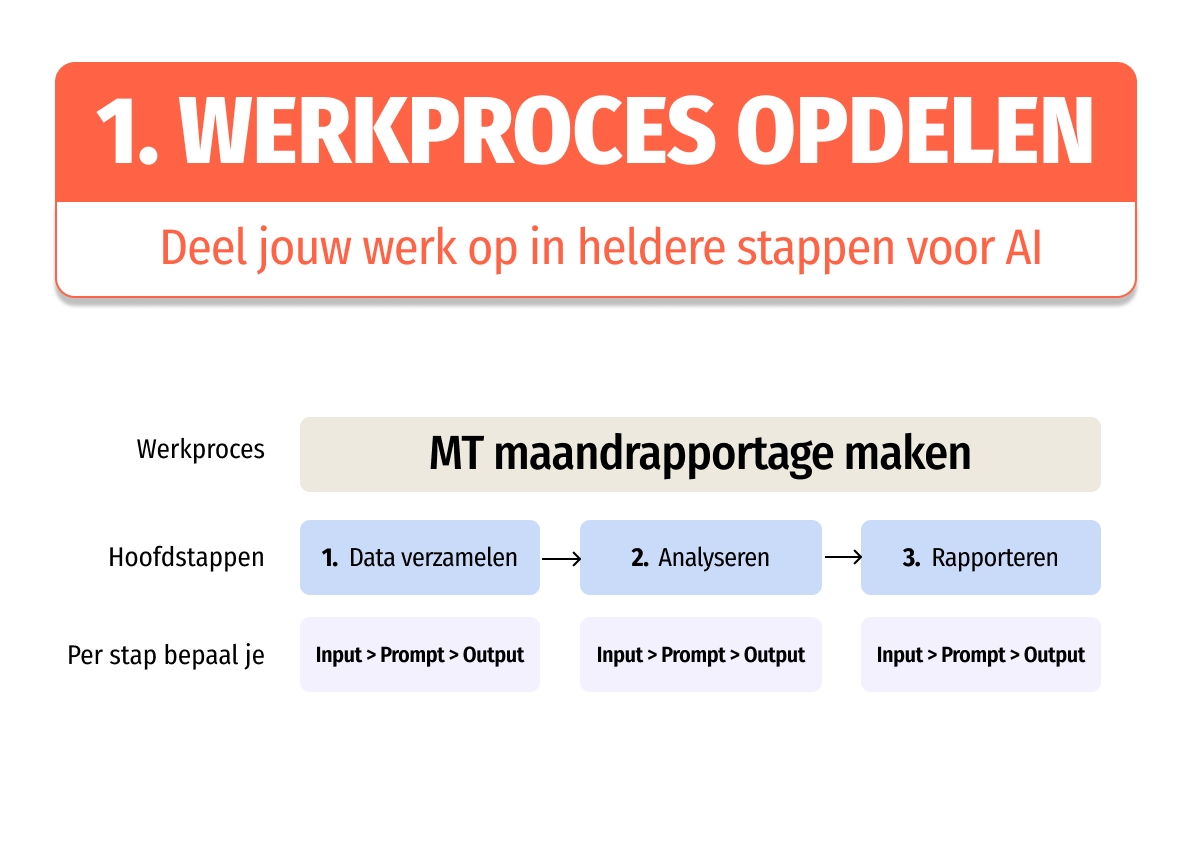
How do you do this?
- 1. Describe your workflow from start to finish
- 2. Identify the key decision points
- 3. Split into 3-5 concrete steps
- 4. Determine per step if AI can help
Document context
Create a context document that provides the AI with all the background needed to consistently deliver good results.
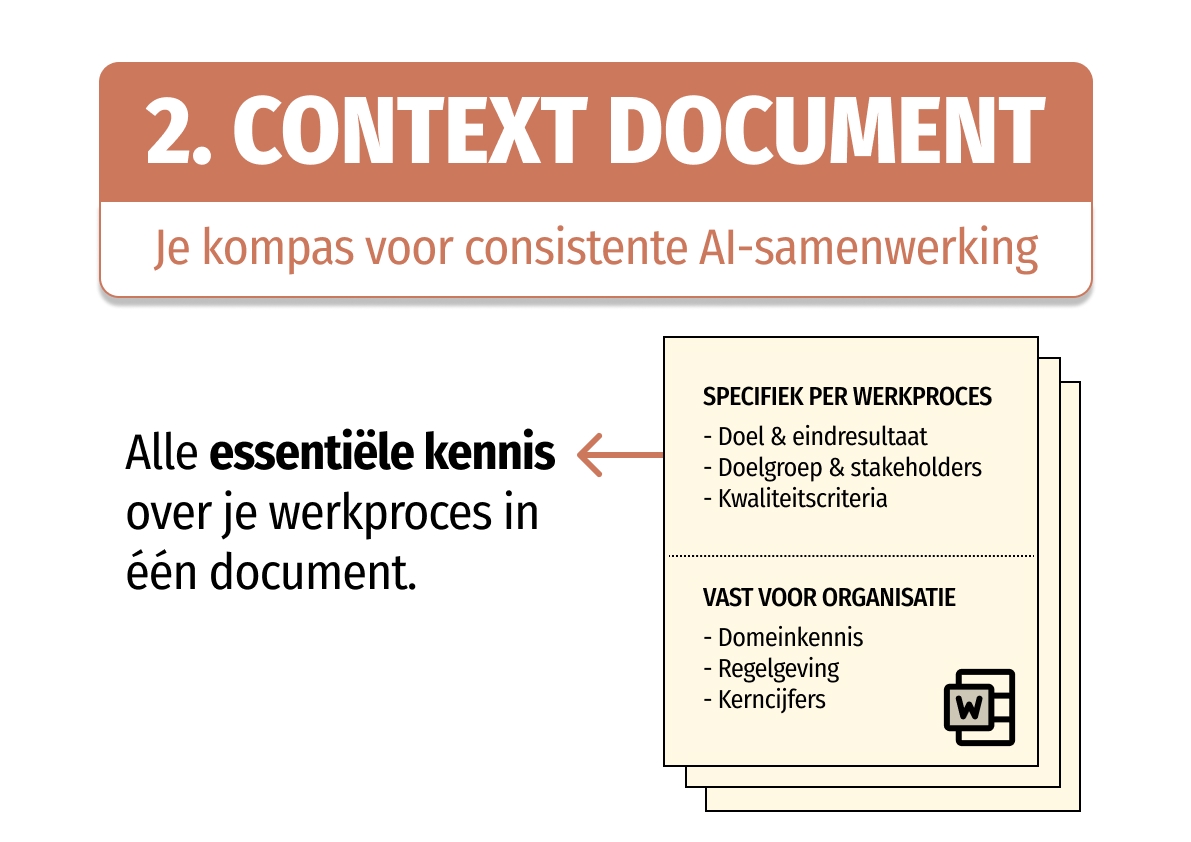
What goes in a context document?
- Role and organization: Who are you and where do you work?
- Main task: What is the goal of this workflow?
- Desired result: What does a good end result look like?
- Guidelines: What style, tone, or rules apply?
Develop prompt templates
Create reusable prompt templates for each step in your workflow. This ensures consistent results.
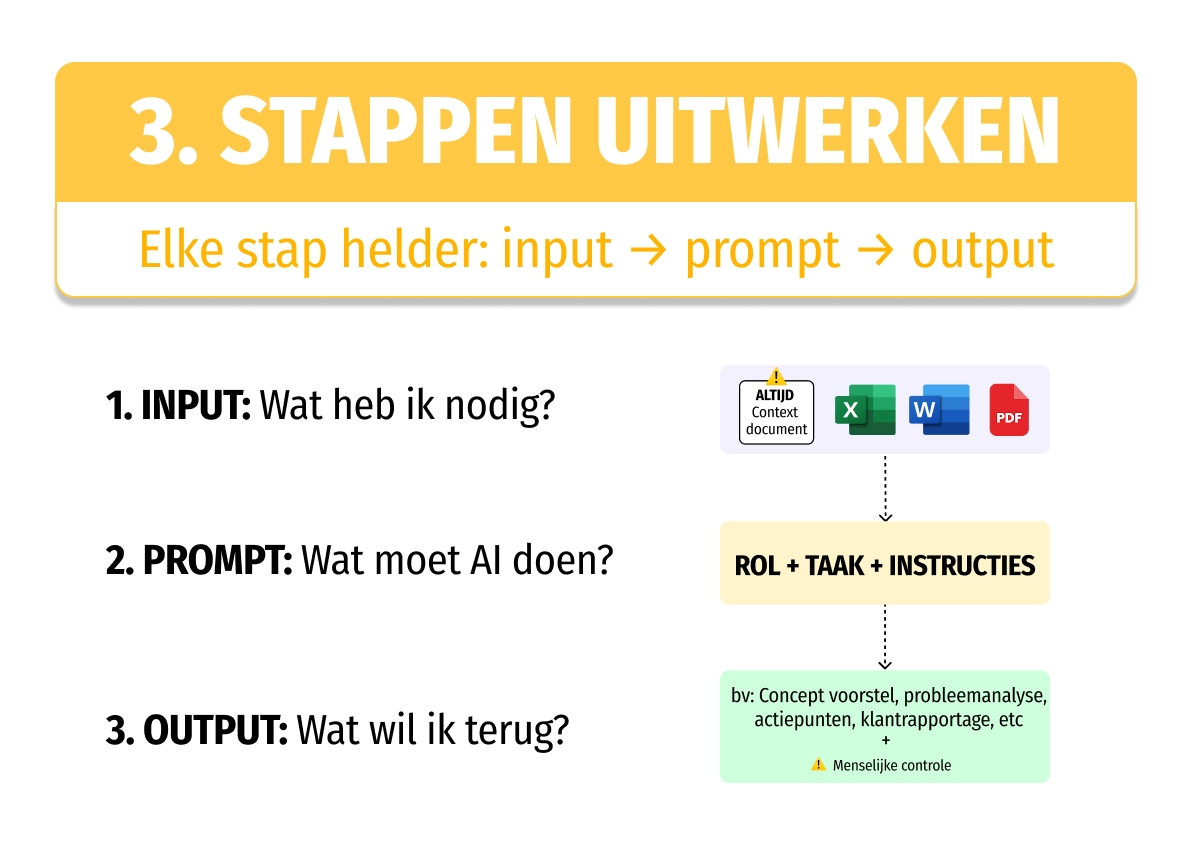
Effective prompt templates
- Clear instruction: What should the AI do?
- Variables: Placeholders [in brackets] for varying input
- Output format: What should the result look like?
- Constraints: What should the AI avoid?
Platform guides
Official documentation for project and context management per platform.
ChatGPT Projects (OpenAI)
ChatGPT Projects helps you organize conversations and files around specific topics.
Open guideMicrosoft Copilot Notebooks
Copilot Notebooks provides a canvas for longer, iterative conversations with context.
Open guideClaude Projects (Anthropic)
Claude Projects lets you save knowledge and instructions for consistent interactions.
Open guideGoogle Gemini
Gemini offers Gems for customizing AI behavior and expertise.
Open guideNext steps
- 1 Apply the method to one workflow from your daily practice
- 2 Test your prompt templates for a week
- 3 Share your workflow with colleagues and gather feedback
- 4 Book a coaching session for personal feedback